Friday, May 18, 2012

Tone

Tone: is the mood or the speakers way of speaking in a poem

Ex:

Crazy

I made you crazy
I drove a man crazy
and yet I dont know how I made him crazy
it wasnt fair for him to be crazy
Im sorry for making you crazy
I wish I could take your place and I be crazy
tell me a way show me a way and make me crazy
my heart hurts cause I made my friend crazy
Please change I dont want you to be crazy
Someone help him, help him, he's crazy
take away his pain that made him crazy
I dont like how I made him crazy
I didnt do it on purpose, I didnt even know I was making him crazy
I wish I could take it all back and he leave me crazy
Stay out of my life
 
The tone of poems are important because it is the way the speaker wanted the poem to said. Also, if you took out the tone of a poem it would sound dull and boring. Tones are important because it is the mood of the poem which can help the reader understand the poem through his or her way.
 
Ex:

Graduation Day

Graduation Day
sweat and mothballs
grass so green

graduation
where green banners wave
grass grows long

graduation night
the owl printed on a balloon
seems the wisest
Wade Blade

Interpretation

Interpretation: is the way you view a poem through your own perspective
Ex:

Interpretation in poems is very important because you can look at poem and understand the poem in a different way than other people's perspective. Also, people that understand the poem through different ways can see the poets message and can interpret the poem in their own way.

Ex:

Thursday, May 17, 2012

Metaphor

Metaphor: a figure of speech that applies to something or to represent a object in poetry
Extended Metaphor: a metaphor that is usually more than one sentence or a group of lines in a poem

Ex:
All the world's a stage,
And all the men and women merely players
They have their exits and their entrances
William Shakespeare


Metaphors are important in poetry because it gives poetry more meaning and it gives a more descriptive meaning of things. Without metaphors writing in poetry would just be plain and boring and not a lot of people would enjoy reading poetry. Also, without metaphors you couldn't compare one thing with another thing which would make reading poetry boring.

Ex:
She was fairly certain that life was a fashion show.


Monday, May 14, 2012

The Speaker

The Speaker: a real person that isn't the poet, but uses it for his or her poetry to describe the mood and tone of the poem in a way that readers can understand the poem better.

Ex:
Epitaph on a Tyrant 
by W. H. Auden

Perfection, of a kind, was what he was after,
And the poetry he invented was easy to understand;
He knew human folly like the back of his hand,
And was greatly interested in armies and fleets;
When he laughed, respectable senators burst with laughter,
And when he cried the little children died in the streets.

The speaker is extremely important to any poem because without the speaker a poem would just sound like a very boring poem and wouldn't give the reader much interest in reading it. Also, a poem wouldn't have a tone or a mood to it and without a tone or mood to the poem it makes it harder to understand the meaning of the play.

Ex:
Man and Wife 
by Robert Lowell

Tamed by Miltown, we lie on Mother's bed;
the rising sun in war paint dyes us red;
in broad daylight her gilded bed-posts shine,
abandoned, almost Dionysian.
At last the trees are green on Marlborough Street,
blossoms on our magnolia ignite
the morning with their murderous five days' white.
All night I've held your hand,
as if you had
a fourth time faced the kingdom of the mad—
its hackneyed speech, its homicidal eye—
and dragged me home alive. . . .Oh my Petite,
clearest of all God's creatures, still all air and nerve:
you were in your twenties, and I,
once hand on glass
and heart in mouth,
outdrank the Rahvs in the heat
of Greenwich Village, fainting at your feet—
too boiled and shy
and poker-faced to make a pass,
while the shrill verve
of your invective scorched the traditional South.

Now twelve years later, you turn your back.
Sleepless, you hold
your pillow to your hollows like a child;
your old-fashioned tirade—
loving, rapid, merciless—
breaks like the Atlantic Ocean on my head.

Thursday, May 10, 2012

Symbol

Symbol: a word or phrase in a poem that usaually has a meaning to it

Ex:
Symbolism is found in colors:
  • Black is used to represent death or evil.
  • White stands for life and purity.
  • Red can symbolize blood, passion, danger, or immoral character.
  • Purple is a royal color.
  • Yellow stands for violence or decay.
  • Blue represents peacefulness and calm. 
Symbols are important in poems because they have the message that the poet wants the readers to understand and without symbols poems wouldn't have any meaning. Also, poems can have symbols can mean more than mean more than one meaning.
\
Objects are often used to symbolize something else:
  • A chain can symbolize the coming together of two things.
  • A ladder can represent the relationship between heaven and earth or ascension.
  • A mirror can denote the sun but when it is broken, it can represent an unhappy union or a separation. 

Couplet

Couplet: a pair of lines in a poem

 Ex:


Couplets are important to poetry because you can make them ryhme which creates a visual picture in somebody's mind which makes it easier to understand. When couplets are added to poetry it adds a twist that makes the writing more creative and original.

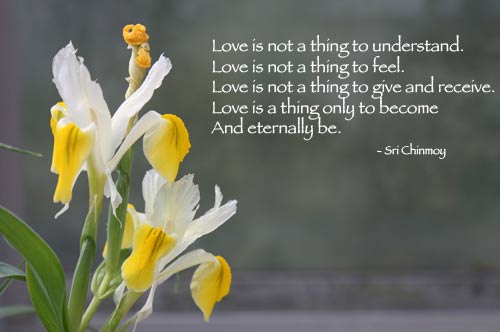
Stanza

Stanza: a group of lines in a poem that are meant to be read as a whole

Ex:

Love

Love is not a thing to understand.
Love is not a thing to feel.
Love is not a thing to give and receive.
Love is a thing only to become
And eternally be.   
                                                        -Sri Chinmoy

Stanzas are important to poetry because when you read a poem, stanzas make understanding the poem how the poet wanted it to be understood. Stanzas make poetry better because you can imagine lots of pictures when reading a poem but it is a lot harder to read poems if the lines in it are not put together.